Gemini 4 Carbon: The Worst AI Model You Can’t Use
Gemini 4 Carbon is Google’s latest AI model that users can’t access. Discover its features and implications.
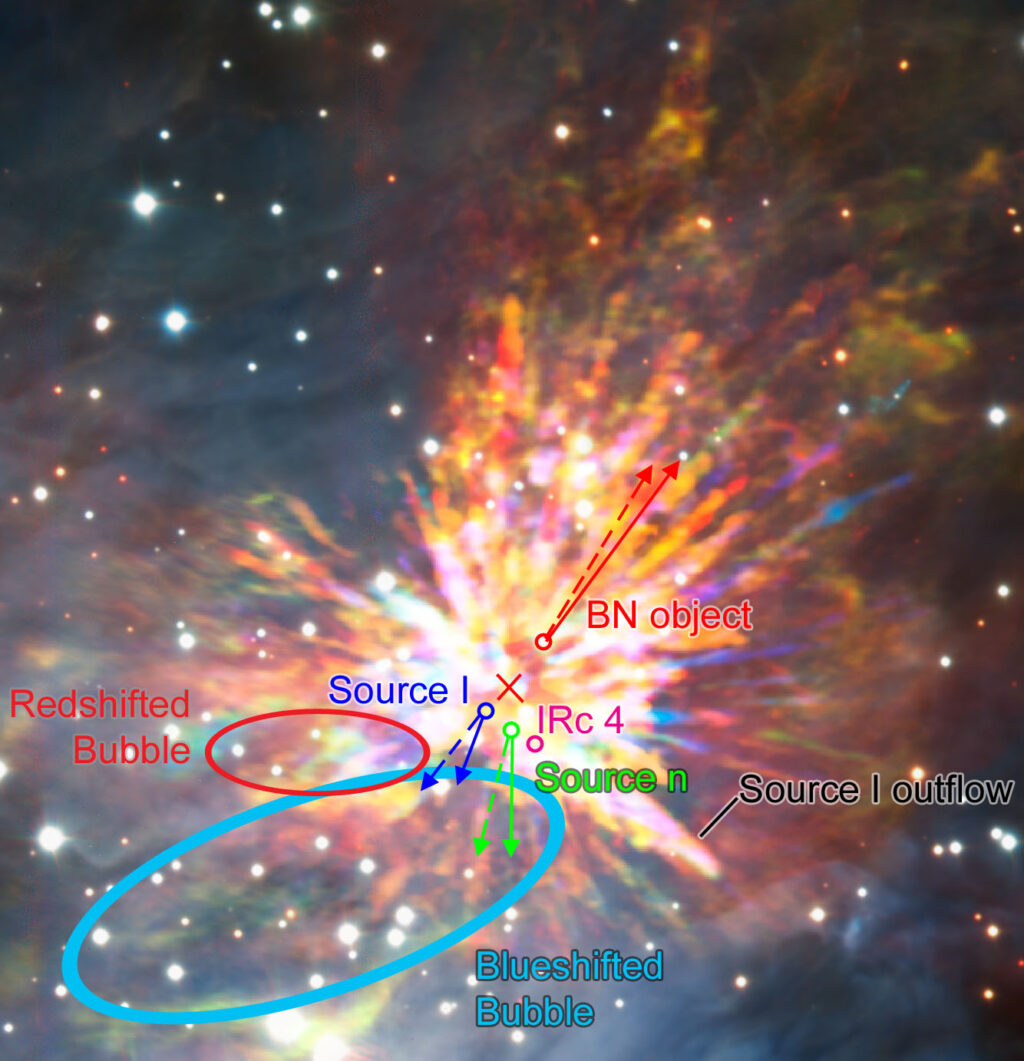
Stellar explosions are most often associated with supernovae, the spectacular deaths of stars. But new ALMA observations of the Orion Nebula complex provide insights into explosions at the other end of the stellar life cycle, star birth. Astronomers captured these dramatic images of the remains of a 500-year-old explosion as they explored the firework-like debris from the birth of a group of massive stars, demonstrating that star formation can be a violent and explosive process too. The colours in the ALMA data represent the relative Doppler shifting of the millimetre-wavelength light emitted by carbon monoxide gas. The blue colour in the ALMA data represents gas approaching at the highest speeds; the red colour is from gas moving toward us more slowly. The background image includes optical and near-infrared imaging from both the Gemini South and ESO Very Large Telescope. The famous Trapezium Cluster of hot young stars appears towards the bottom of this image. The ALMA data do not cover the full image shown here.
Gemini 4 Carbon is the latest AI model from Google, but users are left disappointed as it remains inaccessible. This development raises questions about AI accessibility.
What is Gemini 4 Carbon?
Gemini 4 Carbon is the latest AI model introduced by Google, marking a significant step in the evolution of artificial intelligence technology. Designed with advanced capabilities, Gemini 4 Carbon aims to push the boundaries of what AI can achieve. However, it has garnered attention not just for its features, but for the paradox that it is reportedly unusable for the general public.
This model is part of Google’s ongoing effort to enhance its AI offerings. It incorporates sophisticated algorithms and machine learning techniques that promise to deliver unprecedented performance in various applications. Some of the key features of Gemini 4 Carbon include:
- Enhanced Natural Language Processing: Capable of understanding and generating human-like text.
- Improved Visual Recognition: Advanced imaging capabilities that allow for more accurate identification of objects.
- Real-Time Data Processing: Ability to analyze large volumes of data instantaneously.
Despite these impressive features, the model is shrouded in controversy due to its inaccessibility. Analysts and tech enthusiasts are left wondering why a model with such potential is not made available for widespread use. As discussions continue, the AI community is eager to see how Google will navigate the challenges associated with Gemini 4 Carbon and its implications for the future of AI technology.
Key Features of Gemini 4 Carbon
Gemini 4 Carbon, despite its controversial reputation, boasts several key features that set it apart from its predecessors. While it may not be accessible for practical use, understanding its capabilities provides insight into the future of AI technology.
- Advanced Natural Language Processing: Gemini 4 Carbon utilizes innovative algorithms that enhance its ability to understand and generate human-like text, making it a powerful tool for linguistic applications.
- Improved Data Handling: The model is designed to process vast amounts of data more efficiently, allowing for quicker analysis and response times.
- Cross-Domain Knowledge: One of the standout features is its ability to integrate knowledge from various domains, enabling it to provide contextually relevant information across different subjects.
- Ethical AI Framework: Google has emphasized the importance of responsible AI development, and Gemini 4 Carbon is built with ethical considerations in mind, aiming to mitigate biases often found in AI systems.
- User-Centric Design: Although currently unavailable for public use, the model’s design focuses on enhancing user experience in potential future applications.
While Gemini 4 Carbon may currently be a theoretical construct for many, its key features reflect the ongoing evolution of artificial intelligence and the aspirations that come with it.
Why Can’t Users Access Gemini 4 Carbon?
The recent announcement of Gemini 4 Carbon has left many potential users perplexed and frustrated. Despite its touted advancements and capabilities, accessibility remains a significant issue for those eager to utilize this cutting-edge AI model. Here are a few reasons why users currently cannot access Gemini 4 Carbon:
- Limited Availability: Google has restricted access to Gemini 4 Carbon, primarily offering it to select partners and researchers. This exclusivity means that the general public is left out of the equation.
- Technical Requirements: The infrastructure needed to run Gemini 4 Carbon is not widely available. Many users lack the necessary hardware and software to effectively implement and manage the model.
- Ethical Considerations: As with many advanced AI systems, ethical concerns surrounding the usage of Gemini 4 Carbon have led to a cautious approach by Google. The company is likely deliberating on the implications of releasing such a powerful tool.
- Ongoing Development: Google continues to refine Gemini 4 Carbon, and the model may not be fully ready for widespread use. Users may need to wait until the company is confident in its performance and safety.
In summary, while Gemini 4 Carbon promises to be a groundbreaking innovation in AI, its current inaccessibility raises questions about its future and potential impact on the industry.
Comparison with Previous AI Models
The launch of Gemini 4 Carbon has stirred considerable debate within the AI community, particularly when compared to its predecessors. While it boasts advanced capabilities, its accessibility issues have overshadowed its features. The following points highlight how Gemini 4 Carbon stands against earlier models:
- Performance: Previous models like Gemini 3 were known for their speed and efficiency in processing data. Gemini 4 Carbon, while theoretically more powerful, encounters bottlenecks due to limited user access.
- Usability: Earlier AI models were designed with user-friendliness in mind, allowing for seamless integration into various applications. In contrast, Gemini 4 Carbon’s restrictions mean that many potential users cannot leverage its advanced functionalities.
- Community Feedback: Previous iterations received substantial feedback from users, which led to enhancements in newer versions. The lack of user access to Gemini 4 Carbon has resulted in minimal feedback, leaving developers without essential insights for improvement.
- Innovation vs. Practicality: While Gemini 4 Carbon introduces innovative features, the inability to utilize these advancements raises questions about the model’s practicality compared to older, more accessible versions.
In summary, despite the promise of Gemini 4 Carbon, its limitations in usability and accessibility may ultimately hinder its success relative to prior AI models.
Community Reactions to Gemini 4 Carbon
The announcement of Gemini 4 Carbon has sparked a wave of reactions within the tech community. Many users and industry experts have expressed their frustrations regarding the model’s accessibility and capabilities.
One prominent tech blogger stated, “Gemini 4 Carbon seems like an impressive leap forward in AI technology, but the fact that you can’t even use it is baffling.” This sentiment was echoed across various forums, where discussions about the model quickly turned to its limitations.
Users have taken to social media to share their thoughts, leading to a mix of skepticism and disappointment. Some key reactions include:
- A growing concern over the lack of transparency regarding why Gemini 4 Carbon is not available for public use.
- Calls for more information on what sets this model apart from its predecessors, especially since it boasts advanced features.
- Frustration over the missed opportunities for developers who could have benefited from experimenting with the new model.
As discussions continue, the community remains divided. While there are those who believe in the potential of Gemini 4 Carbon, many are left wondering why Google would announce such a model only to restrict access, leaving users eager yet unsatisfied.
Future of AI Accessibility
The future of AI accessibility remains a critical concern as advancements like Gemini 4 Carbon emerge from leading tech companies. While innovations in artificial intelligence promise to enhance user experiences, the reality is often starkly different for the end user.
Currently, the limitations imposed on accessing Gemini 4 Carbon raise questions about equitable technology distribution. Many individuals and smaller organizations find themselves excluded from harnessing the power of this advanced model due to restrictive access policies. This creates a divide between those who can leverage AI capabilities and those who cannot.
In a world increasingly reliant on AI, it is essential to consider factors such as:
- Cost of Access: High fees associated with premium models often deter smaller players.
- Technical Barriers: Complex requirements can alienate non-expert users.
- Ethical Implications: Limited access raises questions about fairness and bias in AI deployment.
As developers and stakeholders strive to innovate, the emphasis must shift towards creating inclusive systems that democratize AI tools like Gemini 4 Carbon. Only through broader accessibility can the full potential of AI be realized, fostering innovation and collaboration across diverse sectors.
By ALMA (ESO/NAOJ/NRAO), J. Bally/H. Drass et al., adapted by Meli thev via Openverse